|
Getting used to us being around Sidetrack's approach to the Loco project, as with all its productions,
was to make the process just as important as the product. So from the
very beginning, when Sidetrack's writer-in-residence Patrick Cranney started
his two months of research, alone at Chullora, it was as much for what
he could learn from the people working there, as they could gain something
from the product he would be involved in eventually producing. One of the main instigators of the whole project, Brian Dunnett, from
the Combined Shop Stewards Committee, said Pat's presence around the huge
workshop area played a vital part in getting everyone used to the idea
that someone was actually taking the time to find out about the workers'
experiences and feelings, with a view to creating a work of art from and
for them. That realisation was as important as the quality of the final
product. Sidetrack's workforce experienced many of the same problems as Chullora's - they couldn't always get the supplies (of ideas, feelings, understanding) they needed; they couldn't always get the cooperation between themselves necessary to get the job done easily; there were hassles in the production process, and the constant pressure to meet deadlines nearly wrecked the whole operation. |
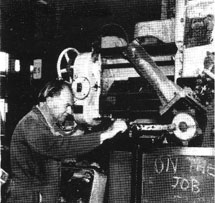
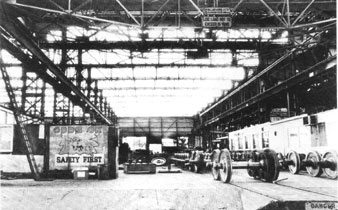
Erecting workshop at Chullora
Producing a play about work proved to be a challenging and contradictory
and cantankerous task. As Christian Manon, who played Joe in the play,
summed it up: ". . . I found myself dreaming about my father's experience
of work. All of us came under the same influence. It wasn't from the 'words'
of the workers, but from their attitudes. It's not their will to be at
work, and we felt the same thing. Will is very important to actors, so
our creativity was much less than usual. For the workers all the desire
is at home." Work as an institution While the object of the production was to give a 'voice' to the views of those working at Chullora, nevertheless all sides were represented fairly and anonymously, and the overriding power of the institution of work itself was presented in a light that clearly showed up its dual nature. As Don commented: It's institutional behaviour largely. What came out in the play was the sense of the wasted creativity and wasted humanity, while at the same time most workers do get some satisfaction from their jobs, and it's not all alienating." Dallas Lewis, Sidetrack's administrator, said Chullora's management personnel
were accommodating and cooperative throughout the whole venture. They
took a pragmatic view towards what was obviously a totally new experience,
which helped make the production a success. That degree of openness from
management would be vital for any similar project. |